
When the song “Papaoutai” was released in 2013, it quickly crossed linguistic and cultural borders. Written and performed by Belgian artist Stromae (born Paul Van Haver), the track became globally influential for its rhythm and its emotional theme of absence of a father or loved one.
More than ten years after its release, the song continues to command cultural relevance. Its recent resurgence, however, has been driven not by licensed reinterpretation or traditional remix culture, but by an artificial intelligence–generated remix that rapidly gained traction online, amassing more than 14 millions views across streaming platforms and achieving high visibility on digital platforms and global charts.
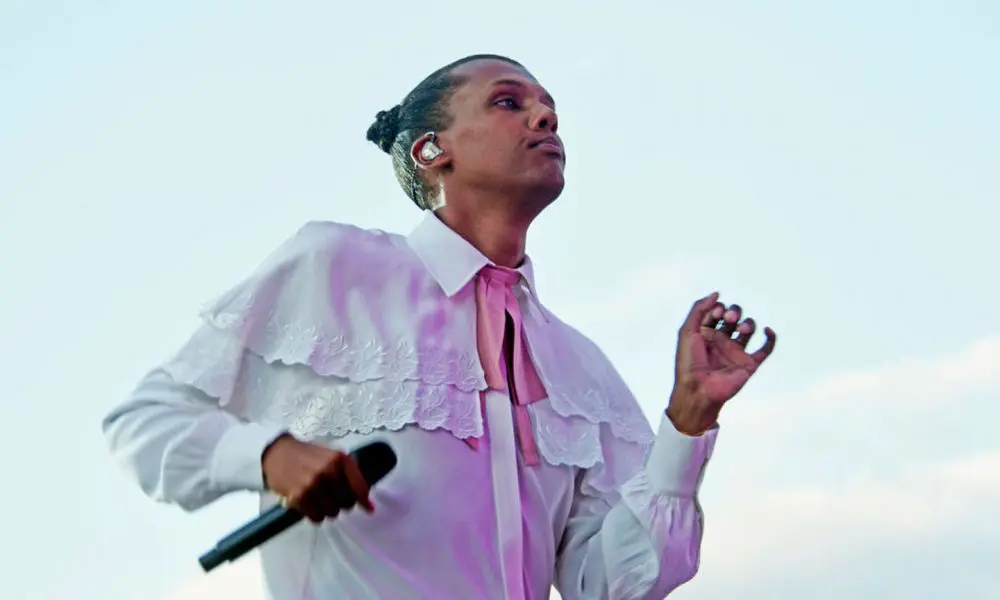
Interestingly, this revival raises a core legal question: when artificial intelligence creates a remix of a copyrighted song, who owns the result, and can it amount to infringement? The case is particularly instructive because the track was produced by Stromae with collaborators Dizzy Mandjeku and Aron Ottignon, and recorded at Mosart Label, a studio co-owned by the artist and his family. These overlapping roles activate multiple layers of protection under Belgium’s copyright regime, shaped by European and international law.
Using Papaoutai as a case study, this article analyses how copyright law addresses AI-assisted remixes and defines the limits of lawful creativity in the generative-technology era. It also highlights the relevance of these issues for jurisdictions such as Nigeria, where music production is economically significant and AI-generated content presents emerging challenges for creators, rights holders, and legal practitioners.
Legal Framework Governing Musical Works in Belgium
Belgian copyright law is codified primarily in Book XI of the Code of Economic Law (Code de droit économique / Wetboek van economisch recht), 2013 – 2014, which consolidates copyright and neighbouring rights into a unified framework and implements Belgium’s obligations under European Union directives and international treaties, most notably the Berne Convention for the Protection of Literary and Artistic Works, 1886.
Under Article XI.165 of the Code of Economic Law, copyright subsists in original literary and artistic works, including musical compositions with or without words, provided that they constitute the author’s own intellectual creation. This originality threshold, derived from the jurisprudence of the Court of Justice of the European Union (CJEU), requires that the work reflect the author’s personal creative choices. Protection arises automatically upon creation, without any requirement of registration or formalities, in conformity with Article 5(2) of the Berne Convention. Accordingly, Stromae’s Papaoutai, as an original musical and lyrical composition, enjoys full copyright protection from the moment of its creation, including the rights of reproduction, distribution, communication to the public, and making available to the public by wire or wireless means.
These rights mirror those harmonised under Directive 2001/29/EC (the InfoSoc Directive), which Belgium has transposed into national law. The scope of these rights is technologically neutral and extends to digital environments, streaming services, and online platforms.
In the context of AI-generated remixes, the right of reproduction is particularly significant. The reproduction right covers not only permanent copies but also temporary reproductions that are integral to a technological process, subject to narrowly defined exceptions. Where AI systems ingest copyrighted works as training data, intermediate copies are often made during the training and inference processes. Unless such reproductions fall within the exception for temporary acts of reproduction under Article 5(1) of the InfoSoc Directive, which requires that the act have no independent economic significance and be transient or incidental, they may infringe the author’s exclusive rights.
In addition, AI-generated remixes that reproduce recognisable melodic, harmonic, or lyrical elements of Papaoutai may constitute unauthorised adaptations or derivative works. Belgian law does not recognise a general right to transformative use. Editing, arranging, or adapting a musical work requires the consent of the right holder, a principle consistent with Article 12 of the Berne Convention. The fact that such adaptation is performed by an algorithm rather than a human agent does not negate the requirement for authorisation where protected expression is reproduced.
Copyright, Moral Rights, and Neighbouring Rights in Music

Notably, Book XI of the Code of Economic Law protects authors through economic rights such as reproduction, adaptation, and communication to the public, and through moral rights, rooted in Article 6bis of the Berne Convention, which safeguard paternity and integrity. These moral rights are perpetual, inalienable, and non-waivable, and persist even when economic rights are licensed. In AI-generated remixes, moral rights are crucial: altering the emotional tone, lyrical emphasis, or cultural context of a work like Papaoutai can be challenged as prejudicial to the author’s honour or reputation. Belgian law does not require proof of economic harm to establish moral rights infringement.
Neighbouring rights add another layer of protection. As the performer, Stromae enjoys rights under Book XI, harmonised at the EU level through Directive 2006/115/EC (Rental and Lending Rights Directive) and Directive 2011/77/EU, which extended protection for performances and sound recordings. As the phonogram producer via Mosart Label, Stromae holds phonogram producer rights, which protect the sound recording independently of the composition. AI remixes that sample or closely imitate the original recording may therefore infringe copyright, performers’ rights, and phonogram rights simultaneously.
AI, Training, and the Limits of Lawful Use
The legal status of AI-generated remixes involves several doctrines. AI systems often reproduce works during training; these reproductions may infringe unless covered by the temporary acts of reproduction exception in Article 5(1) of Directive 2001/29/EC (InfoSoc Directive), which requires the act to be transient, incidental, and without independent economic significance.
The Directive (EU) 2019/790 on Copyright in the Digital Single Market (CDSM Directive) allows text and data mining (TDM) under Articles 3 and 4, but these exceptions are narrow. Article 3 applies to research organizations and cultural heritage institutions, while Article 4 permits broader TDM but allows right holders to reserve their rights. Crucially, neither exception allows public dissemination of outputs that reproduce protected expression.
Belgian law presumes human authorship as a condition for copyright, consistent with CJEU jurisprudence, meaning AI-generated works lack independent protection. However, reproduction, adaptation, or communication of copyrighted elements without authorization remains infringement. AI outputs do not change this legal analysis: Article XI.165 protects original musical works; Article XI.167 reserves adaptation rights to the author; and Article XI.174 reserves communication to the public. The AI nature of the remix is irrelevant: technologically neutral law focuses on the outcome, not the process.
Liability attaches to humans or corporate actors, not AI. Primary liability arises from the individual or entity deploying the AI and uploading the remix. Secondary liability may arise for developers who intentionally facilitate infringement. Hosting platforms may incur conditional liability under EU intermediary liability regimes, with obligations strengthened by the Digital Services Act (Regulation (EU) 2022/2065).
Furthermore, Belgian copyright law provides robust enforcement for AI-generated infringements. Rights holders can seek injunctive relief, including expedited interim measures, and claim damages for economic loss or moral rights violations. Notice-and-takedown procedures against online platforms are supported under EU law, with cross-border enforcement enabled by EU harmonization and the Berne Convention 1886.
Comparative Perspective: AI-Generated Music and Nigerian Copyright Law
While the controversy surrounding Papaoutai arises within a European legal context, the issues it exposes are not geographically confined. Nigeria, as one of the largest music-producing jurisdictions in the global south and a significant exporter of creative content, faces analogous challenges in regulating AI-generated music under a copyright framework similarly premised on human authorship.
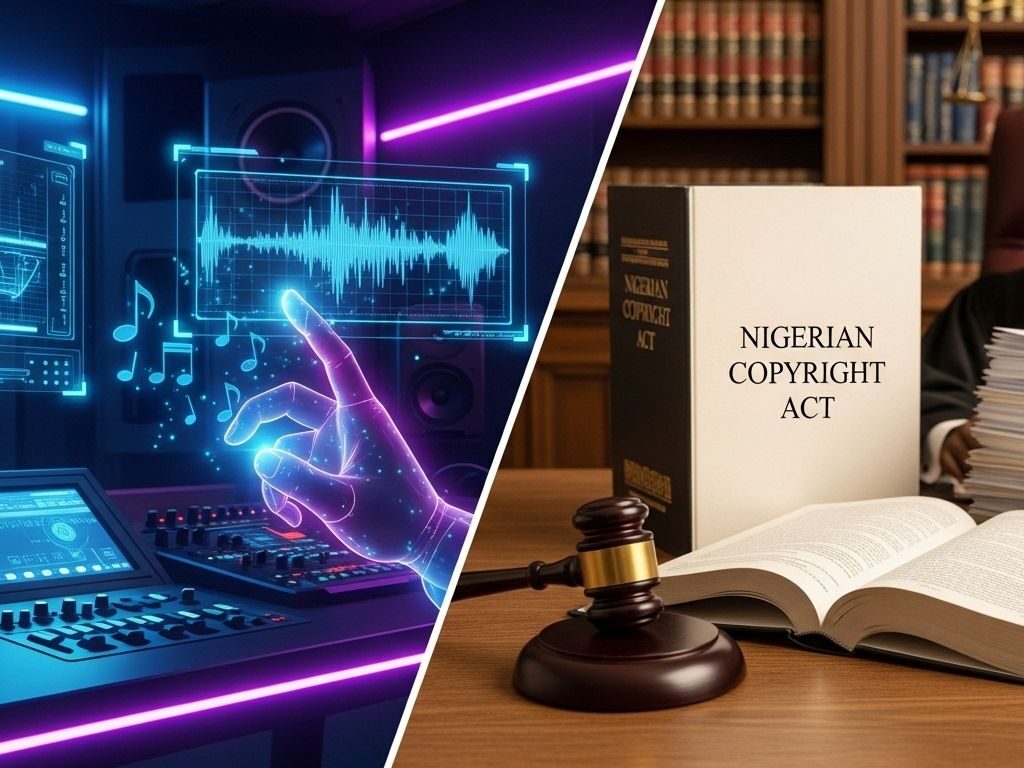
Copyright protection in Nigeria is governed by the Copyright Act 2022, which modernised the country’s copyright regime and repealed the earlier 1988 Act. Like Belgian law, Nigerian copyright protection arises automatically upon the creation of an original work, without registration or formalities, in accordance with Section 2 of the Act and Nigeria’s obligations under the Berne Convention. Musical works are expressly protected, and originality is understood as requiring the author’s intellectual effort, skill, and judgment — a formulation that, while not identical to the EU’s “author’s own intellectual creation” standard, similarly presupposes human creative agency. The Nigerian Act grants authors exclusive rights of reproduction, publication, performance, adaptation, and communication to the public. An AI-generated remix of a song such as Papaoutai, if analysed under Nigerian law, would therefore raise parallel infringement concerns. The reproduction of the original work during AI training, the creation of a derivative musical output reproducing recognisable elements of the protected song, and the online dissemination of that output without authorisation would each fall within acts reserved exclusively to the copyright owner under Sections 6 and 9 of the Act.
Notably, Nigerian copyright law also affords authors moral rights, including the right to claim authorship and to object to distortion or mutilation of their work. These rights, codified in Section 14 of the Copyright Act 2022, reinforce the personal relationship between author and work and persist independently of economic exploitation. An AI-generated remix that alters the emotional or cultural meaning of a song like Papaoutai would therefore be open to challenge on moral rights grounds in Nigeria, much as it would be under Belgian law.
However, unlike the European Union, Nigeria currently lacks a dedicated statutory framework addressing artificial intelligence or text and data mining. The Copyright Act 2022 does not contain AI-specific exceptions analogous to Articles 3 and 4 of the CDSM Directive. As a result, the legality of AI training on copyrighted music in Nigeria would be assessed strictly under existing reproduction and fair dealing provisions. Given the narrow scope of Nigeria’s fair dealing exceptions, which are limited to purposes such as research, private use, criticism, or review, it is unlikely that large-scale commercial AI training on copyrighted music would be lawful absent authorisation.
The Nigerian perspective thus reinforces, rather than undermines, the conclusions drawn from Belgian law. In both jurisdictions, copyright doctrine remains firmly anchored in human creativity and consent-based exploitation. AI-generated remixes that appropriate protected musical expression without authorisation would face substantial legal risk, even in the absence of AI-specific regulation.
Conclusion and Policy Recommendations
The Papaoutai remix controversy demonstrates that artificial intelligence does not render copyright law obsolete; rather, it tests the capacity of legal systems to enforce it coherently. Technological innovation may expand creative possibilities while simultaneously increasing the risk of misappropriation. Copyright law therefore remains the principal mechanism for balancing innovation with protection.
For creators, platforms, and policymakers alike, the lesson is clear – the future of creative industries will depend not only on advances in artificial intelligence, but also on the effectiveness of legal frameworks in preserving consent, attribution, and remuneration. AI may transform production and distribution, but it does not extinguish the obligation to respect the rights of human authors.
Authors
- Lugard Tare-Otu (Managing Partner)
- Somkenechukwu Melina Okechukwu (Senior Associate)
- Gbe-emi Patience Obiri (Associate)
- Kiadusomowo Gordon Otobo (Associate)
- Chiziyara Favour Woka (Associate)
Add a Comment